Vanilla is one of the most precious spices in the world. Yet behind every dark, oily pod lies work of remarkable precision and patience. In Madagascar, among the lush green hills of the SAVA region, vanilla production is far more than an agricultural activity — it is a way of life, a cultural heritage passed down from parent to child, from generation to generation.
At Elevation Haavo Vanilla, we want to take you on this fascinating journey — from the white flower that opens at dawn to the fragrant pod that elevates your culinary creations.
The Vanilla Plant: A Tropical Orchid with Unique Demands
The vanilla plant (Vanilla planifolia) is a climbing vine belonging to the orchid family. Originally from Mexico, it has found an exceptional home in Madagascar: humid forests, a warm tropical climate, and an ideal altitude between 200 and 600 meters. These particular conditions give Madagascar vanilla its incomparable aroma — rich and creamy, with notes of caramel and soft wood.
But growing vanilla requires extraordinary patience. The plant takes an average of three years before producing its first flowers. And it is only at the moment of flowering that everything truly begins.
Hand Pollination: The Gesture That Changes Everything
This is perhaps the most iconic step in Madagascar vanilla production. In its native land of Mexico, vanilla is naturally pollinated by a specific bee, the Melipona, which does not exist in Madagascar. Here, every flower must therefore be pollinated by hand, one by one, by skilled men and women with nimble fingers.
Each vanilla flower stays open for only a few hours a day, early in the morning. The grower has a very narrow window — often before noon — to perform this delicate gesture: using a small wooden stick or an orange thorn, they lift the membrane separating the male and female organs of the flower and bring them into contact to allow fertilization.
This gesture, repeated thousands of times during the flowering season, largely explains the price of vanilla. It is entirely human work — slow, precise, and absolutely essential.
Nine Months of Waiting: The Growth of the Pod
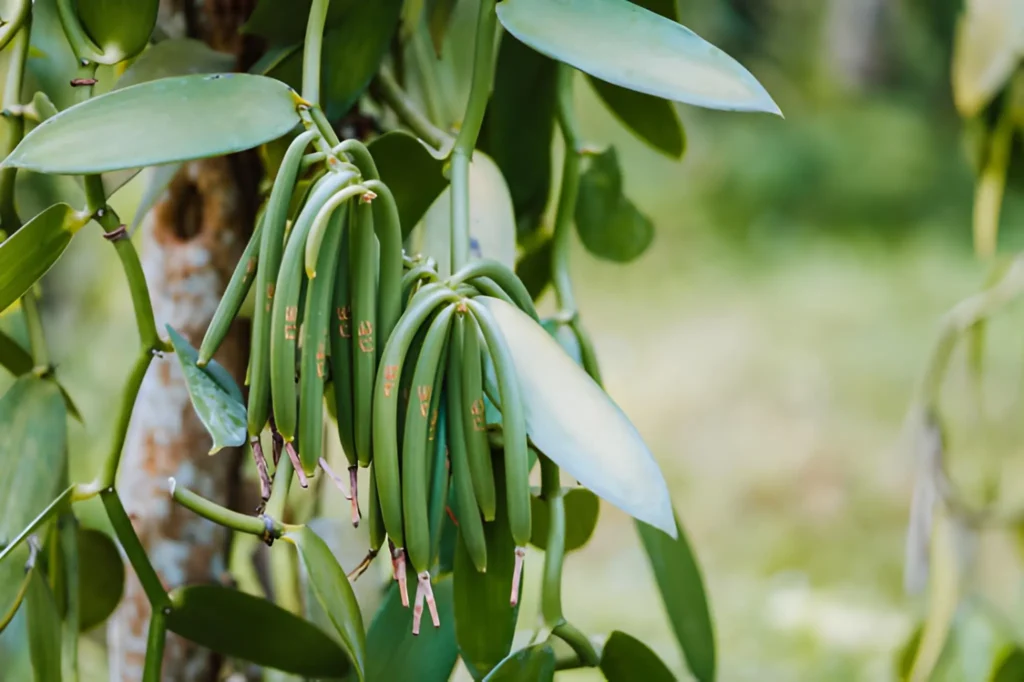
Once pollinated, the flower gradually transforms into a pod. This transformation takes approximately nine months — the same as a human pregnancy. Growers carefully watch over their vines: they protect the pods from animals, manage natural irrigation, and ensure that climatic conditions remain favorable.
At maturity, the vanilla pod is still green and odorless. Its characteristic aroma is not yet present — it will only develop during the preparation stages that follow the harvest. This is one of the fascinating paradoxes of this spice: fresh off the vine, it smells of almost nothing. All its magic is revealed through transformation.
The Harvest: A Decisive Moment
The harvest takes place between July and September. Growers pick the pods one by one, by hand, selecting those that show the first signs of maturity: a slight yellowish tint at the tip, a firm and plump texture. Harvesting too early or too late compromises the final quality of the product.
On our plots in the SAVA region, each harvest is a moment of collective pride. Families come together, movements are precise and respectful — only what is ready is picked.
The Curing Process: The Art of Revealing the Aroma
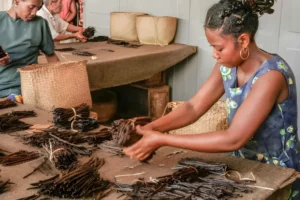
It is during the curing stages — known in French as the bonification — that the green pod becomes the precious black vanilla you know and love. This artisanal process, codified since the 19th century using what is known as the “Bourbon method,” involves several essential phases:
1. Scalding The freshly harvested pods are immersed for a few minutes in hot water (between 60 and 65°C / 140–150°F). This thermal shock halts the pod’s vegetative process and triggers the enzymatic reactions that will begin releasing the aromas.
2. Sweating After scalding, the pods are wrapped in wool blankets and kept in the dark for 24 to 48 hours in sealed wooden crates. The accumulated heat causes a light fermentation and gives the pods their beautiful deep chocolate color.
3. Sun-drying Every morning for two to four weeks, the pods are spread out on racks or woven mats under the sun, then brought back inside each evening. This alternation of sun and shade allows for a gradual and even dehydration. It is a step that demands daily presence and constant attention.
4. Conditioning in trunks This is the longest and most secretive phase. The pods are placed in wooden trunks lined with waxed paper, where they refine their aromas for several months — sometimes up to eight months. It is during this period that the vanilla’s fragrance reaches its full complexity and depth.
5. Grading and sorting Before sale, each pod is measured, visually inspected, and classified according to its length, moisture content, and overall appearance. A premium-quality pod measures between 16 and 20 cm, is supple and oily to the touch, and has a vanillin content above 1.6%.
Madagascar Bourbon Vanilla: Why Is It the Best?
The Bourbon Vanilla label designates vanilla produced in the Indian Ocean — in Madagascar, Réunion, the Comoros, and Mauritius. It is a mark of excellence recognized worldwide. And among all origins, Madagascar stands out for the consistency and exceptional intensity of its vanilla.
Several factors explain this superiority:
The richness of Malagasy soil — volcanic and mineral — nourishes the vines deeply. The microclimate of the SAVA region, with its abundant rainfall and stable temperatures, creates ideal growing conditions. And above all, the expertise of Malagasy growers, passed down through generations, guarantees perfect mastery of every step, from pollination to curing.
Today, Madagascar produces between 60 and 80% of the world’s vanilla supply — a leading position built entirely on the skill and passion of its farmers.
Our Commitment: Vanilla Grown with Care and Respect
At Elevation Haavo Vanilla, we are growers first and foremost. Our plots are cultivated without pesticides or chemical products, in full respect of the environment and local ecosystems. We work in direct partnership with farming families in the region, honoring their expertise and ensuring they receive fair and honest compensation.
Every pod you receive has been touched by dozens of caring hands, tended for over a year, and carefully selected to bring you the very best of Madagascar.
Because exceptional vanilla doesn’t happen by chance. It is grown, respected, and passed on.
How to Use Madagascar Vanilla
Madagascar Bourbon vanilla can be used in a wide variety of preparations:
In baking and pastry, it perfumes custards, cakes, madeleines, tarts, and soufflés. Split the pod lengthwise, scrape out the black seeds, and fold them directly into your preparations. The empty pod can then be left to infuse in warm milk or a jar of sugar.
In savory cooking, it adds a floral and warm note to fish sauces, poultry marinades, and exotic vinaigrettes.
In drinks, a single pod is enough to subtly flavor a rum infusion, a warm milk drink, a cocktail, or even a carafe of still water left overnight.
In homemade cosmetics, vanilla seeds enrich body scrubs and moisturizing creams with a soft, enveloping scent.
Vanilla from Madagascar is far more than a spice. It is the fruit of a unique land, a generous nature, and men and women who dedicate their lives to it. Every time you open one of our pods, you breathe in that story.