When you hold a premium black vanilla bean from Madagascar, you are holding the result of a meticulous transformation process that spans several months. This process — known as curing or affinage — is what turns a green, odorless orchid pod into the aromatic spice the world treasures. Without curing, a vanilla bean has no commercial value whatsoever. It is the skill, patience, and tradition of the farmers in the Sava region that unlocks the potential hidden within each pod.
The curing of vanilla is both an art and a science. It has been refined over generations, passed down from parent to child in the farming communities of northeastern Madagascar. While modern technology has introduced some improvements in monitoring and consistency, the core principles remain the same: careful timing, precise temperature control, and an intimate understanding of each bean’s changing state throughout the process.
For importers and buyers, understanding this process is not merely academic curiosity. The quality of the curing directly determines the flavor, aroma, shelf life, and ultimately the value of the vanilla you purchase. A bean that has been properly cured will deliver superior performance in your products, whether you are making pastry cream, ice cream, fragrances, or pharmaceutical extracts.
In this article, we will take you through each stage of the vanilla curing process in detail, explaining what happens at every step and why it matters for the final quality of the product.
Step 1: Harvesting at the Right Moment
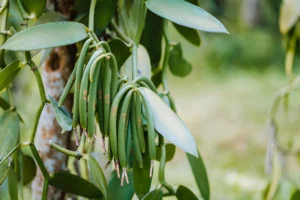
The journey of vanilla curing begins even before the beans are picked. Vanilla orchids are pollinated by hand on the day they bloom — a delicate operation that requires a steady hand and years of experience. Each flower is open for only a few hours, and if pollination does not occur within that window, no pod will form. It takes approximately 8 to 9 months from pollination for the bean to reach full maturity.
Determining the exact moment of harvest is one of the most critical decisions a vanilla farmer makes. The beans are ready when they begin to turn from bright green to a pale yellowish-green, starting at the base of the pod. This color change signals that the internal chemical composition has shifted: the chlorophyll is breaking down, and the precursors of vanillin — particularly glucovanillin — have accumulated to their peak levels.
Harvesting too early means the bean lacks the necessary precursors for flavor development. No amount of skill in the later stages can compensate for an early harvest. The resulting vanilla will be thin, with low vanillin content and a flat, one-dimensional aroma. Harvesting too late, on the other hand, causes the bean to split open at the tip, which reduces its commercial grade and makes it more susceptible to rot during curing. The split also allows moisture to escape too quickly, disrupting the delicate balance needed for proper enzymatic activity.
At Elevation Haavo Vanilla, our partner farmers inspect their plantations daily during the harvest season. Each bean is evaluated individually and picked by hand at the optimal moment. This level of attention is only possible because of our direct relationships with smallholder farmers — relationships built on trust, fair pricing, and shared commitment to quality.
Once picked, the green beans are sorted by size and quality. Damaged or inferior beans are removed at this stage, ensuring that only the best material moves forward into the curing process. The sorted beans are then transported to the curing facility, typically within hours of harvest, to begin the next stage without delay.
Step 2: Blanching (Scalding)
Blanching, also called scalding or killing, is the first active step in the curing process. The freshly harvested green beans are immersed in hot water at a carefully controlled temperature of 63 to 65 degrees Celsius (approximately 145 to 149 degrees Fahrenheit) for precisely 2 to 3 minutes.
This short but intense heat treatment serves several critical purposes. First, it stops the vegetative growth of the bean, essentially killing the living plant tissue. If this step were omitted, the bean would continue to respire and eventually rot or germinate rather than cure. Second, the heat shock causes the cell walls to rupture, releasing the enzymes and substrates that will later combine to create vanillin and other aromatic compounds. Third, the hot water initiates the breakdown of glucovanillin into vanillin, jumpstarting the chemical transformations that define the curing process.
The temperature and duration of blanching must be precisely controlled. Water that is too hot or blanching that lasts too long will denature the enzymes permanently, halting all subsequent flavor development. The bean may look fine on the outside but will never develop a strong aroma. Water that is too cool or blanching that is too short will fail to stop the vegetative processes, leading to uneven curing and an increased risk of spoilage.
After blanching, the beans emerge a rich brown color, having lost their bright green hue. They are drained and immediately wrapped in blankets to retain heat and moisture for the next phase. Experienced farmers can judge the success of blanching by the color and smell of the beans — a skill that takes years to develop.
At Elevation Haavo Vanilla, we use calibrated thermometers and timers for this stage, but we also rely on the trained eyes and hands of our master curers. The combination of precision instruments and traditional knowledge ensures that every batch is blanched to perfection.
Step 3: Sweating
Sweating is arguably the most critical phase of the entire curing process. It is during this stage that the majority of the enzymatic conversion from glucovanillin to vanillin takes place. The blanched beans are wrapped in wool blankets or placed in insulated wooden boxes — called sweatboxes — where they are kept warm and humid for 24 to 48 hours.
During sweating, the internal temperature of the beans remains elevated from the blanching step, typically around 45 to 50 degrees Celsius. The blankets or boxes trap the moisture released by the beans, creating a steam-bath environment. This high humidity keeps the enzymes active and mobile within the bean tissue, allowing them to access and convert the glucovanillin stored throughout the pod.
The farmer must monitor the sweating process constantly, checking the temperature and the condition of the beans every few hours. If the temperature drops too low, the enzymatic reactions slow down. If it rises too high, the beans may begin to ferment or cook, producing off-flavors. The beans are also turned and rearranged periodically to ensure even exposure to the warm, humid environment.
By the end of the sweating phase, the beans have undergone a dramatic transformation. They have turned from brown to a deep chocolate color. Their texture has softened considerably, and they have lost a significant amount of their initial moisture. Most importantly, the first unmistakable notes of vanilla aroma have begun to emerge. A well-sweated bean will already smell distinctly of vanilla, even though the full flavor profile is still months away from completion.
The sweating process is typically repeated over several cycles. Each cycle consists of a sweating period followed by a short airing or sunning period, and this alternation is what builds the complexity of the final flavor. Most curing operations in the Sava region perform 3 to 5 such cycles, depending on the condition of the beans and the ambient weather.
Step 4: Sun Drying
After the initial sweating cycles, the beans enter the sun-drying phase, which typically lasts 2 to 3 weeks. Each morning, the beans are spread out on wooden racks or mats in the open air, where they are exposed to the gentle tropical sun. They remain in the sun for approximately 2 to 4 hours, depending on the intensity of the sunlight and the moisture content of the beans.
The purpose of sun drying is twofold. First, it gradually reduces the moisture content of the beans from approximately 80 percent down to the target range of 30 to 35 percent. This controlled dehydration is essential for preservation — beans with too much moisture will mold; beans with too little will become brittle and lose their aromatic potential. Second, the sun’s ultraviolet radiation and warmth continue to drive the chemical reactions that develop the vanilla flavor, including the Maillard reaction that contributes roasted, caramelized notes.
After their morning sun exposure, the beans are gathered up and returned to the sweatboxes or wrapped in blankets for the afternoon and overnight. This alternation between sun and sweat is what gives properly cured Madagascar vanilla its characteristic depth and complexity. Each cycle builds on the previous one, progressively transforming the bean’s internal chemistry.
The farmer must be attentive to weather conditions throughout this phase. Rain or excessive cloud cover requires adjustments to the schedule. Beans left out too long in intense sun can sunburn, developing dry patches and losing quality. The thickness of the bean spread, the type of drying surface, and even the direction of the prevailing wind all influence the drying rate and must be managed accordingly.
As drying progresses, the beans continue to darken, eventually reaching the deep brown to black color that characterizes premium Madagascar vanilla. The surface becomes slightly oily as the vanillin and other aromatic compounds migrate to the exterior. Experienced curers can judge the moisture content by the feel of the beans — their flexibility, weight, and the sound they make when gently squeezed.
Step 5: Conditioning (Affinage)
The final and longest phase of the curing process is conditioning, also known as affinage. This is where the vanilla truly comes into its own. The beans are sorted by quality and size, then packed into sealed containers — traditionally wooden boxes lined with beeswax or food-grade materials — and stored in a cool, dark, well-ventilated room for 3 to 6 months.
During conditioning, the enzymatic and chemical reactions continue at a slow, steady pace. The vanillin content, which may have reached only 0.5 to 1 percent by the end of drying, continues to rise to its final level of 1.5 to 2.5 percent or higher. The hundreds of minor aromatic compounds — the ones responsible for the subtle notes of floral, spice, wood, and fruit — develop and harmonize. The moisture content stabilizes and equalizes throughout the bean, ensuring consistent texture from end to end.
The sealed environment is crucial. It prevents the beans from drying out further while still allowing a small amount of air exchange to prevent anaerobic conditions. The darkness prevents UV light from breaking down the delicate aromatic compounds. The cool temperature slows the reactions enough to allow them to proceed with precision rather than rushing to completion.
During conditioning, the beans are inspected regularly — typically every 2 to 4 weeks. Each inspection involves opening the containers, checking for any signs of mold or spoilage, and sorting the beans by appearance and aroma. Beans that are ready are separated and set aside for grading and packaging. Beans that need more time are returned to conditioning.
One of the most remarkable phenomena that occurs during conditioning is the formation of vanillin frost — the thin, crystalline coating of pure vanillin that sometimes appears on the exterior of well-cured beans. This frost is not a defect; it is a sign of excellence. It indicates that the vanillin concentration within the bean has become so high that the compound is crystallizing on the surface. Beans with visible vanillin frost are prized by professional buyers.
At Elevation Haavo Vanilla, we condition our beans for a minimum of 3 months, and our premium grades often receive 6 months or more of conditioning before they are deemed ready for export. The patience required for this final stage is one of the reasons why truly exceptional vanilla commands a premium price.
The Importance of Skilled Curing
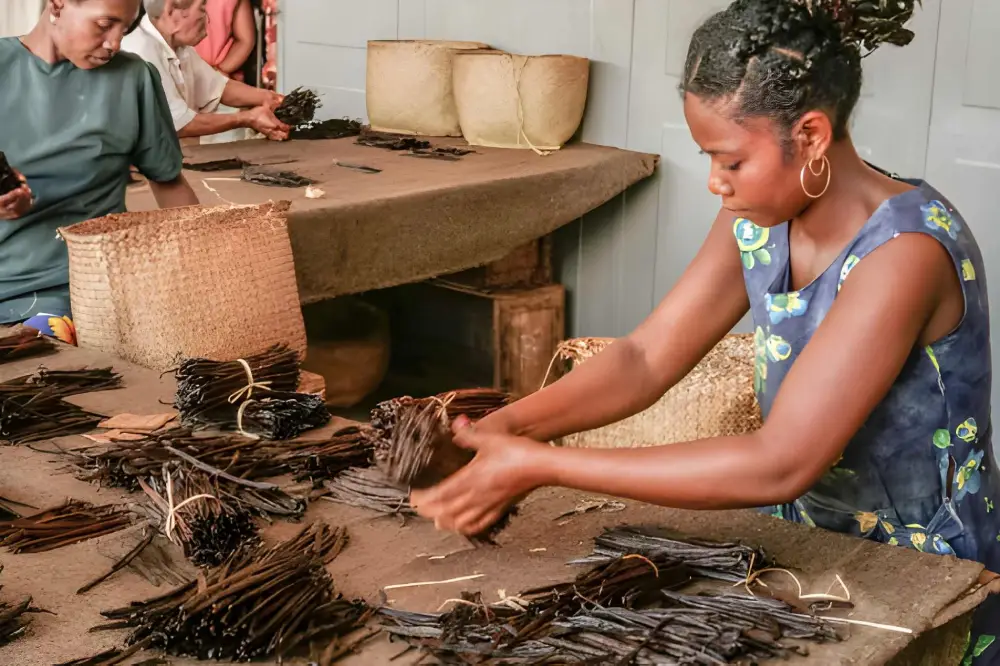
The entire vanilla curing process, from harvest to finished product, requires approximately 6 to 8 months. It involves dozens of individual decisions by skilled farmers who have learned their craft through years of practice and observation. There is no automation that can replace the judgment of an experienced curer — the ability to look at a bean, touch it, smell it, and know exactly what it needs at each stage.
This is why the relationship between the exporter and the farmer is so important. At Elevation Haavo Vanilla, we do not simply buy beans from unknown sources. We work directly with over 500 farming families in the Sava region, many of whom have been our partners for years. We provide training in best practices, offer fair prices that reward quality, and maintain consistent quality standards through regular communication and inspection.
The result is a vanilla bean that has been cured with skill, patience, and care — a bean that will deliver exceptional flavor, reliable performance, and complete traceability from plantation to your warehouse. When you choose Elevation Haavo Vanilla, you are choosing the art of traditional curing, perfected over generations and delivered with professional consistency.