Why Choose Madagascar Vanilla for Export?
Bourbon vanilla from Madagascar is globally recognized for its exceptional vanillin content — up to 2.5% — its woody, creamy aroma, and the depth of flavor it brings to finished products. These characteristics make it the reference ingredient for premium chocolatiers, pastry chefs, and high-end cosmetics manufacturers worldwide.
Compared to Mexican or Tahitian vanilla, the Planifolia variety grown in Madagascar offers an unbeatable quality-to-price ratio for volume purchases, particularly for orders ranging from 1 kg to several metric tons.
Key producing regions
The SAVA region — Sambava, Antalaha, Vohémar, Andapa — accounts for the bulk of production. The climate conditions, tropical heat, abundant rainfall, and moderate altitude, create an ideal terroir. Reputable exporters can provide precise lot provenance, which is an essential traceability guarantee for discerning buyers.
Vanilla Grades: How to Evaluate Quality Before Buying
Not all vanilla lots are created equal. Before placing an export order, it is essential to understand the grading system used in Madagascar.
Grade A — Gourmet vanilla. Supple, plump, oily pods with a minimum length of 16 cm. Ideal for premium food manufacturing and artisan pastry. Higher price point, but maximum aromatic value.
Grade B — Extraction vanilla. Drier pods, sometimes split, with variable length. Vanillin content identical or close to Grade A. Recommended for vanilla extract production, natural flavors, and the cosmetics industry. Optimal cost-to-efficiency ratio for large volumes.
Grade C — Cut vanilla. Pod fragments and sorting offcuts. Used exclusively in industrial extraction. Very low price, lesser aromatic quality.
Vanilla Export Procedure: The Key Steps
Exporting vanilla from Madagascar is governed by precise regulations. Here is the standard process that a certified exporter follows for every international shipment.
1. Lot selection and sorting. Manual sorting of pods by grade, moisture control, and weighing. Each lot is tracked from the growing plot through to final packaging.
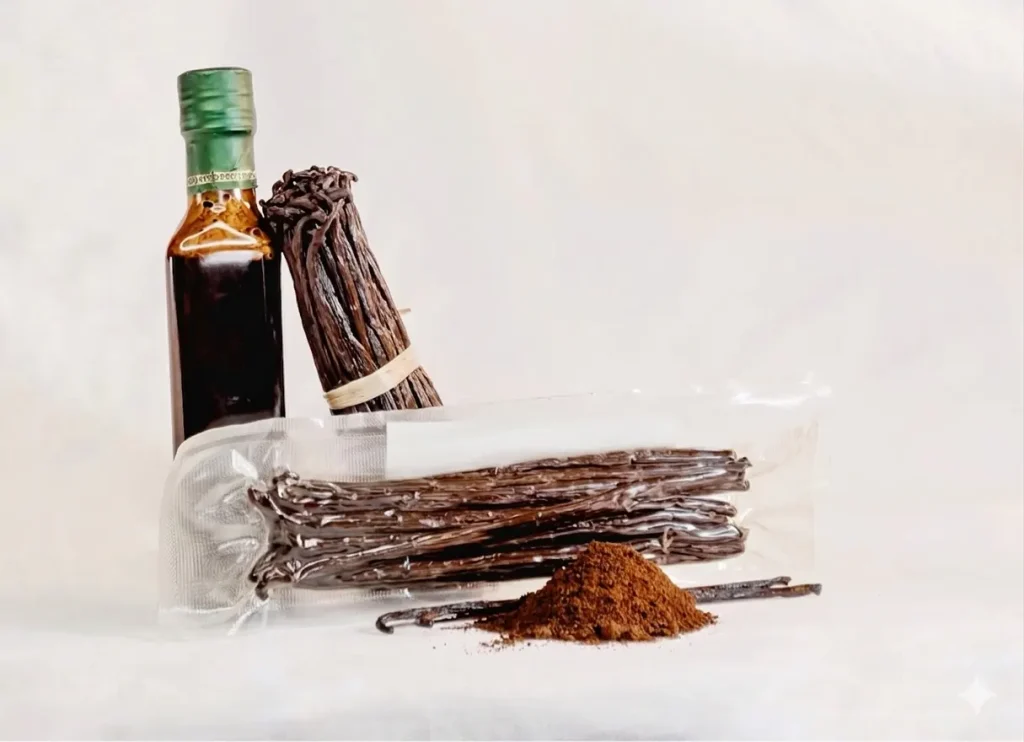
2. Vacuum or airtight packaging. Packaging is tailored to the transit duration, whether by air or sea. Vacuum sealing preserves the aromas for 12 to 18 months.
3. Obtaining official certifications. Phytosanitary certificate issued by the MAEP, certificate of origin, and depending on the destination: organic, Fairtrade, or Rainforest Alliance certification.
4. Customs declaration and export clearance. Declaration to Malagasy authorities, payment of export duties, and coordination with the international freight forwarder.
5. Shipment and logistics tracking. Air freight (3 to 7 days) or maritime container (25 to 45 days depending on destination). A reliable exporter provides real-time tracking to the buyer.
Certifications and International Compliance
Importing vanilla into the European Union, the United States, or Japan requires specific documentation. Verify that your supplier is able to provide the following documents according to your target market.
For the EU: phytosanitary certificate, EUR.1 or Form A certificate of origin, compliance with EC Regulation 396/2005 on pesticide residues.
For the USA: FDA Prior Notice, certificate of origin, compliance with the FSMA (Food Safety Modernization Act).
For organic: NOP certification for the United States, EU Organic for Europe, or JAS for Japan. Always request the annual certificate from the certifying body.
For fair trade: Fairtrade International or SPP certificate, increasingly required by brands with active CSR commitments.
Vanilla Export Prices in 2025: What You Need to Know
The vanilla market is one of the most volatile in the world. In 2025, the FOB Antananarivo price for Grade A vanilla ranges between 150 and 280 USD/kg, depending on quality, season, and order volume.
Several factors drive price fluctuations: weather events such as cyclones or drought, speculation on the global market, and demand from the food industry. Working directly with an established exporter rather than an intermediary guarantees more stable pricing and better lot traceability.
For recurring orders, negotiate an annual contract with a price floor and lot reservation. This effectively protects you against end-of-season price spikes.
Frequently Asked Questions About Importing Vanilla
What is the minimum order quantity for export? Most serious exporters accept orders from 1 kg by air freight and 25 kg for sea shipments. For large volumes above 500 kg, preferential terms are generally negotiable.
How do I verify lot quality before paying? Always request samples of 50 to 200 g before making any commitment. A trustworthy exporter will also provide laboratory analysis reports covering vanillin content, moisture levels, and the absence of pesticide residues.
What are the average delivery times? By air freight, expect 3 to 7 business days to Europe, the USA, or the Middle East. By sea freight, 25 to 45 days depending on the destination port. Properly packaged vanilla retains its aromas for 18 to 24 months.
Is Madagascar vanilla really the best in the world? Malagasy Planifolia is the preferred choice of chefs and manufacturers for its complex aromatic profile: creamy, woody, and lightly smoky notes. Tahitian vanilla offers distinct floral notes but is produced in far smaller quantities. For consistent volume supply, Madagascar is the clear answer.
Can you source certified organic vanilla from Madagascar? Yes. Many cooperatives are certified organic, particularly in the SAVA region. Expect a 15 to 30% premium over conventional vanilla. Demand is high and stocks are limited — place your order well ahead of the harvest season, which runs from May to July.